
Asset declaration laws, also known as financial disclosure or wealth declaration rules, require public officials to report their income, assets and liabilities to a designated authority. The logic is simple enough: if wealth must be recorded, unexplained growth is easier to notice. Article 8(5) of the United Nations Convention against Corruption encourages states to consider such systems, and international bodies have spent more than two decades comparing how they work in practice.
What those comparisons show is variety rather than convergence. The OECD’s 2011 study of asset declarations found that systems vary greatly from country to country, and that their impact on actual corruption is not well known. That is worth remembering before any list of the “strictest” laws. There is no official global ranking, and strict rules on paper are not the same thing as strict enforcement.

The ten jurisdictions below are grouped by the features that researchers and oversight bodies generally treat as meaningful: how many officials are covered, whether spouses and dependent children must be disclosed, how often declarations are filed (including on leaving office), how thoroughly they are verified, what sanctions apply, and whether the public can read them.
One clarification on that last point. Some of the most demanding systems keep declarations confidential, while some fully public registers cover fewer people. Both choices carry trade-offs, so this list reflects overall rigor rather than openness alone.

Ten countries that set a high bar
1. Ukraine
Ukraine’s Law on Prevention of Corruption replaced a paper-based system with the electronic Register of Declarations in 2016. An IMF technical assistance report published in July 2026 describes it as one of the largest and most complex disclosure systems in the world, with more than 1.7 million registered users and roughly 700,000 declarations filed each year. Coverage is broad: the president, prime minister, ministers, members of parliament, senior judges and their family members all fall within scope. Officials file on entering office, annually and on leaving, and must report significant changes, such as income or a property purchase above 50 minimum wages, or a new foreign account, within 10 days. Verification is risk-based, and mandatory declarations were restored in October 2023 after a wartime pause.
2. Philippines
The Statement of Assets, Liabilities and Net Worth (SALN) has a constitutional basis in Article XI, Section 17 of the 1987 Constitution, which requires public officers and employees to declare their assets, liabilities and net worth under oath. Republic Act No. 6713 sets the mechanics. Under the Civil Service Commission’s 2025 Omnibus Rules, the SALN must list assets, liabilities, net worth, business interests and financial connections, together with those of a spouse and unmarried children under 18 living in the household, plus a list of relatives in government within the fourth degree of consanguinity or affinity. Filing is required within 30 days of taking office, by April 30 each year, and within 30 days of leaving.
3. Botswana
Botswana’s Declaration of Assets and Liabilities Act, 2019, applies to the president, vice-president, the speaker, cabinet ministers, judges, public officers at deputy-director level and above, and heads of private enterprises. Two features stand out. The obligation continues for five years after a person leaves office, and a declaration must cover the interests, income, assets and liabilities of a spouse and children under 18. Failure to file, or filing information known to be false, can attract a fine of up to P500,000, imprisonment of up to 10 years, or both. Declarations go to an Ethics and Integrity Directorate rather than being published.
4. Canada
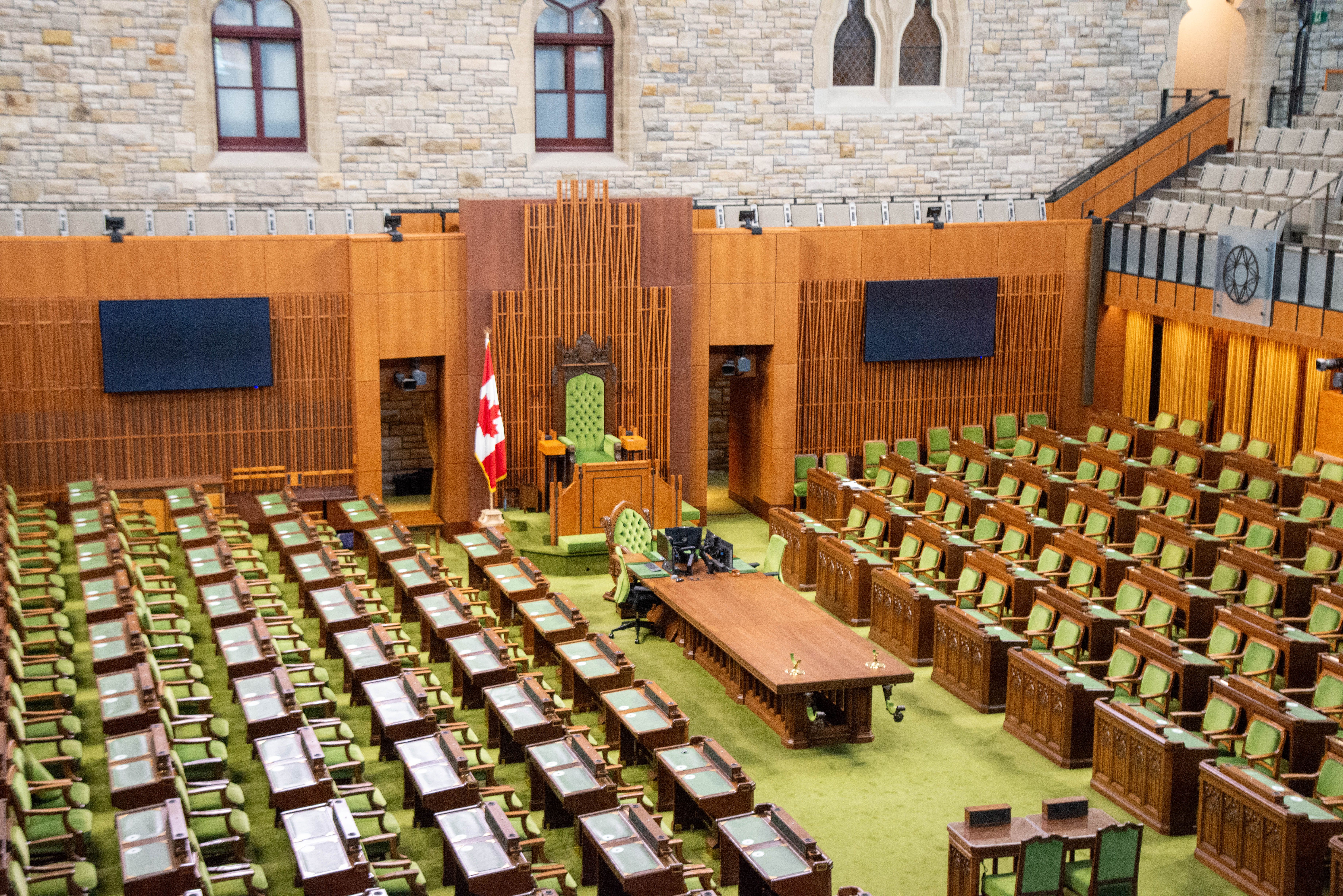
Canada’s Conflict of Interest Act imposes a two-track system on what it calls reporting public office holders, a group that includes ministers, parliamentary secretaries and senior officials. Within 60 days of appointment they file a confidential report describing all assets and contingent liabilities and estimating their value. Within 120 days they make public declarations of assets that are neither controlled nor exempt, and they must divest controlled assets, meaning holdings whose value could be affected by government decisions, either at arm’s length or through a blind trust. Ministers must divest all controlled assets without exception. Gifts worth $200 or more from a single source must be disclosed, and ministers publicly declare liabilities of $10,000 or more.
5. Mongolia
Mongolia’s Anti-Corruption Law of 2006 and Conflict-of-Interest Law of 2012 require income and asset declarations from a long list of officials, including the president, members of the State Great Khural, the prime minister and cabinet, judges, prosecutors and the leadership of the central bank. Declarations are filed within 30 days of election or appointment and annually by February 15, with substantial changes reported within 30 days. The Independent Authority Against Corruption registers and verifies them, and declarations for the highest officials are published online. An OECD monitoring report has noted that the oversight structure is decentralised, which can complicate verification.
6. Mexico
Mexico’s General Law of Administrative Responsibilities requires asset and interest declarations from all public servants, across federal, state and municipal government, all three branches and autonomous bodies. Federal filings are made through DeclaraNet, an electronic system, while a national digital platform works toward interoperability across levels of government. Officials file an initial declaration, an annual modification declaration and a final declaration when they leave. Public versions of the declarations are made available. The standardised formats and rules became effective for federal bodies from 1 January 2020.
7. Indonesia
Indonesia’s LHKPN, the Report on the Wealth of State Officials, rests on Law No. 28 of 1999 and Law No. 30 of 2002, and is administered by the Corruption Eradication Commission (KPK). State officials must report their wealth, including the assets of a spouse and dependent children, through the e-LHKPN system. Reporting is required when first taking office, on retirement, and periodically each year by 31 March. The KPK makes declarations available to the public and can review reports for discrepancies between declared wealth and known income.
8. Rwanda
Rwanda’s asset declaration framework is set out in Law No. 55 of 2021, with the Office of the Ombudsman receiving and verifying declarations. Covered officials include senior officeholders and those who manage public funds, property or tenders. They file within one month of taking office, annually by 30 June, and within 15 days of leaving office. The Ombudsman’s office examines whether declared assets were lawfully acquired and may refer cases to prosecution authorities where explanations are inadequate. The declarations themselves are not published, though verification is treated as a core function of the system.
9. Singapore
Singapore’s system is notable for breadth rather than publicity. Under the Code of Conduct for Ministers, each minister must disclose to the president, in confidence, their sources of income and their assets and liabilities on appointment. Public officers make annual declarations of interests, investments and properties to the head of their agency, including investments and properties owned by a spouse and financially dependent children. Separately, the Public Sector (Governance) Act 2018 requires members of public bodies to disclose conflicts of interest and to abstain from related discussions and votes. Declarations are generally not made public.
10. United States
The Ethics in Government Act of 1978 established public financial disclosure reports for senior officials across the three branches of the federal government. The Office of Government Ethics reports that new entrants and nominees typically file within 30 days of assuming a covered position, incumbents file annually by May 15, and departing officials file a termination report within 30 days. Reports cover positions, income, assets, transactions and liabilities, and are released to the public on request. Transparency International has described the United States as often being cited as having one of the most comprehensive disclosure regimes.
How the ten compare at a glance
The table below sets out the filing cycle and public access for each system. The most striking split is not how often officials file, since most require annual reporting, but whether the public can read the results.
| Country | Who must declare | Filing cycle | Public disclosure |
|---|---|---|---|
| Ukraine | Senior officials across all branches, plus family members | On entry, annually, on exit, plus 10-day change reports | Yes, published online |
| Philippines | All public officials and employees, with narrow exemptions | On entry, annually (April 30), on exit | Available on request, with conditions |
| Botswana | President, ministers, judges, senior officers and some private-sector heads | On entry and periodically, plus 5 years after leaving | No, confidential |
| Canada | Reporting public office holders | Confidential report in 60 days, public declaration in 120 days, updates | Yes, public declarations and summary statement |
| Mongolia | President, parliament, cabinet, judges, prosecutors, central bank | On entry, annually (February 15), 30-day change reports | Yes, online for listed officials |
| Mexico | All public servants, at every level of government | On entry, annually, on exit | Yes, public versions |
| Indonesia | State officials, including spouse and dependent children | On entry, annually (March 31), on exit | Yes, public register |
| Rwanda | Senior officials and managers of public funds or tenders | On entry (1 month), annually (June 30), on exit (15 days) | No, confidential |
| Singapore | Ministers and all public officers | On appointment and annually | No, confidential |
| United States | Senior officials in all three federal branches | On entry (30 days), annually (May 15), on exit (30 days) | Yes, released on request |
Sources: national legislation and oversight bodies, as cited above; current as of 2026.
What the strictest systems tend to share
Across otherwise very different countries, a handful of design choices recur. Primary legislation, rather than internal guidance, usually anchors the obligation. Family assets are included, on the reasoning that property held by a spouse or dependent child is a common place to put assets out of sight. Filing happens at three moments, not one: when an official takes office, each year thereafter, and on departure. And the rules attach sanctions to non-compliance, whether administrative, civil or criminal.
Even so, rules are only as effective as the institutions behind them. The independence and capacity of the body that receives and checks declarations, the quality of the data it can cross-reference, and the broader environment in which it operates all shape outcomes. The same theme surfaces in recent political reporting on how anti-corruption bodies navigate their surroundings.

Where the evidence is more cautious
Strict laws attract attention, but the research on their effect is more measured than the design ambitions suggest. The OECD notes that the impact of declaration systems on corruption levels is not well established, and that there is no convincing evidence that covering the broadest possible circle of officials necessarily prevents corruption more effectively. The IMF’s review of Ukraine’s system points to a practical constraint common to large registers: a wall of data against a limited number of trained verifiers, which makes prioritising high-risk filings a necessity rather than a choice.
Quantitative work adds nuance rather than a verdict. A study of 91 countries published in the European Journal on Criminal Policy and Research in 2016 found a positive but lagged association between expanded disclosure legislation and a country’s capacity to control corruption, and its authors cautioned that disclosure alone would not deliver results. Earlier research by economists on 175 countries found that public disclosure, rather than confidential reporting, was the element associated with lower perceived corruption. That finding cuts against systems such as those in Singapore, Rwanda and Botswana, which are demanding in scope but keep the filings private. The counter-argument is that confidentiality can protect officials’ privacy and encourage candid reporting, and there is no universal answer to the trade-off.
Frequently asked questions
What is an asset declaration?
It is a statement, usually filed under oath, in which a public official lists their income, assets, liabilities and sometimes outside interests. It may also cover a spouse and dependent children, and it is submitted to an agency, a court or a dedicated integrity body rather than to the public by default.
Is there an official ranking of the strictest asset declaration laws?
No. There is no single authoritative global ranking. Bodies such as the OECD, the World Bank and the UNODC assess systems on separate dimensions, including coverage, frequency, verification and public access, and a country can score strongly on one and weakly on another.
Do all countries publish asset declarations?
No. Many disclosure laws keep filings confidential and release them only to investigating authorities. Research suggests that public disclosure tends to be more strongly associated with accountability outcomes, while confidential systems are sometimes defended on privacy grounds.
What happens if an official fails to file or files false information?
Consequences vary by jurisdiction. They may be administrative or disciplinary, such as suspension or dismissal, or they may be civil or criminal, including fines or imprisonment. In some countries, unexplained wealth that cannot be reconciled with declared income can itself be treated as an offence.
Do asset declarations cover family members?
In many demanding systems, yes. Spouses and dependent children are commonly included, on the reasoning that assets can be registered in a family member’s name. The exact treatment of spouses, including those who are not public officials, differs from country to country.
Do asset declaration laws reduce corruption on their own?
The evidence suggests they can contribute when they are public, verified and backed by enforcement, but not that they work in isolation. Researchers generally describe the effect as modest and delayed, and dependent on wider institutional conditions.
How this article was put together
This overview set out to compare how selected countries structure asset declaration duties for public officials, and for whom. It draws on primary legislation and national oversight bodies, together with evaluations from the OECD and the IMF and peer-reviewed research on disclosure, checked in 2026. Countries were grouped by coverage, filing frequency, verification approach, sanctions and public access; the selection reflects overall rigor and is not an official ranking. Figures such as filing deadlines and penalty amounts come from the cited laws and agencies and may change.